
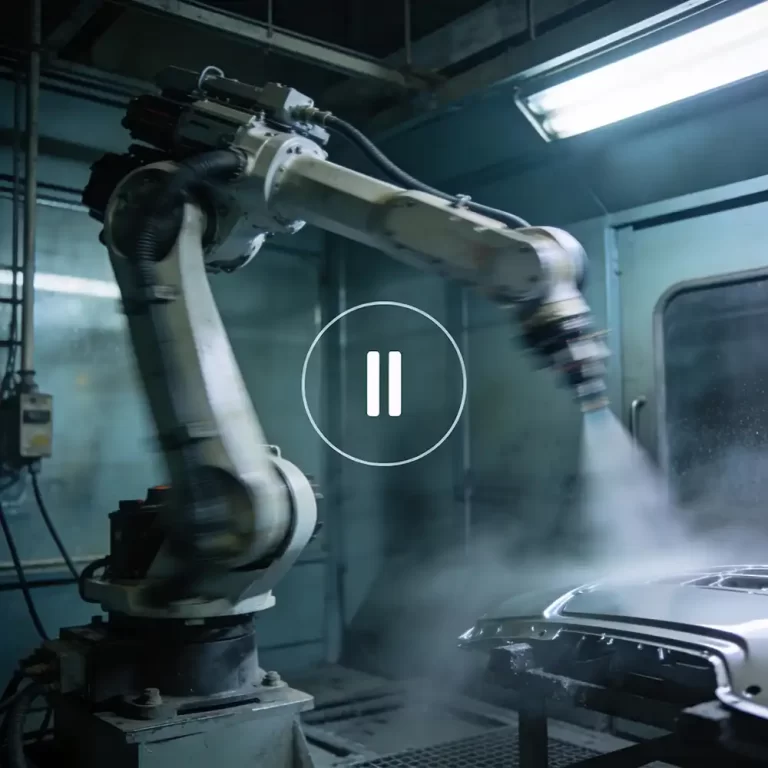
The Stagnation Paradox: Why your paint line is spraying less than you think
The schedule says the line runs eight hours a day. So the utilisation rate looks fine on paper. But if we look critically at the clock, we often see a shocking picture: the time that paint or powder actually lands on a product is only a fraction of those eight hours. Welcome to the downtime paradox.
In the world of manufacturing, we call this the OEE (Overall Equipment Effectiveness). In the paint shop, this effectiveness is often eroded by “small” interruptions that add up to a huge leak in productivity.
Where is the time?
Downtime rarely results from one major catastrophic failure. It is the stealth killers that reduce daily output:
The Colour Change Trap: How much time is lost in cleaning pumps, pipes and guns? With a poorly organised colour change, the line stands still, while the clock (and labour costs) just keep running. Those who want to make colour changes faster can also this article on EcoSupply P Core and colour changes in the paint line view.
Waiting for material: Nothing is more fniving than a sprayer who is ready but has to wait because the next batch has not yet been taped off or because the right suspension hooks are untraceable.
Unclear planning: “What should we do next?” When that question is asked several times a day, you lose precious hours of coordination and doubt.
Technical hiccups: A faltering conveyor, a furnace that does not come up to temperature or a pump that hits air. These are often “little things” that interrupt the flow every time. In practice, this is also linked to maintenance and process reliability in paint processes and the base before application, such as process optimisation through paint supply and metering.
The gap between “occupied” and “effective”
Often, a line is “scheduled busy”, but the actual lacrosse time is low. This is because we look at the hours people are present, rather than the metres the line makes. Every minute the line stops for a colour change that could also have been done faster is lost turnover that you never make up.
How do you get the flow back?
Optimising time starts with visualising waste:
Measure change times: Know exactly how long a colour change takes and look for ways to reduce it (e.g. by colour sequence optimisation). Practical deepening can be done via paint application training.
Kit-to-line: Get everything (paint, hooks, masking) ready before the previous batch is finished.
Preventive maintenance: Prevent stops by replacing critical parts before they break down.
Downtime is the most expensive form of attendance. By restoring flow, you increase the capacity of your existing line without spending an extra euro on machines. More context and depth can also be found via TechTalk.
This text has been prepared based on content from TLCA Coating & Application.
FAQ
1) What is the downtime paradox in a paint line?
That a line runs for eight hours on paper, but the effective paint time is often only a fraction of that.
2) Which interruptions most erode effectiveness?
Among other things, colour changes, waiting for material, unclear planning and technical hiccups.
3) How can you get the flow back?
By measuring changeover times, organising kit-to-line and applying preventive maintenance.

A paint line can be scheduled busy, while the effective paint time remains low due to small interruptions. Making downtime visible and securing flow increases the capacity of the existing line.